The evolution of mobile networks has always marked a significant leap forward in how we connect and interact with the world. From the first voice calls on 1G to the mobile internet access of 3G and the high-speed streaming enabled by 4G, each generation has reshaped our digital lives. Now, the fifth generation of wireless technology, or 5G, is here, promising a transformation that extends far beyond faster smartphone downloads. Its impact on mobile technology is not just an incremental upgrade; it’s a foundational shift that will power a new era of innovation. This article explores how 5G is revolutionizing mobile technology, its benefits and challenges, and its profound implications for the future.
What Makes 5G a Game-Changer?
To understand 5G’s impact, it’s essential to look at its core technological advantages over its predecessor, 4G LTE. Three key characteristics set 5G apart: enhanced mobile broadband (eMBB), ultra-reliable low-latency communications (URLLC), and massive machine-type communications (mMTC).
Unprecedented Speed and Bandwidth
The most talked-about benefit of 5G is its incredible speed. While 4G offers respectable speeds that allow for HD video streaming, 5G takes this to another level. Theoretically, 5G can reach peak speeds of up to 10 gigabits per second (Gbps), making it 100 times faster than 4G. This means you could download a full-length 4K movie in just a few seconds. This enhanced mobile broadband capability not only improves consumer experiences like streaming and gaming but also enables new applications that require massive data throughput, such as augmented reality (AR) and virtual reality (VR) on mobile devices.
Ultra-Low Latency
Latency is the delay between when a signal is sent and when it is received. For 4G, this delay is typically around 20-30 milliseconds. 5G, however, aims to reduce latency to as low as 1 millisecond. This near-instantaneous response time is crucial for applications where real-time communication is non-negotiable. Think of a surgeon performing a remote operation using a robotic arm or autonomous vehicles communicating with each other to avoid collisions. This ultra-reliable low-latency communication is perhaps 5G’s most transformative feature.
Massive Connectivity
5G is designed to connect a vastly larger number of devices simultaneously within a given area. While 4G can support around 4,000 devices per square kilometer, 5G can handle up to one million. This capability is the backbone of the Internet of Things (IoT). With massive machine-type communications, everything from smart home appliances and wearable fitness trackers to industrial sensors and city-wide infrastructure can be connected to the network without congestion.
Transforming Industries with 5G
The unique combination of speed, low latency, and massive connectivity allows 5G to act as a catalyst for change across numerous sectors. Its impact goes far beyond personal communication, reshaping how entire industries operate.
Healthcare: The Dawn of Connected Medicine
The healthcare industry is on the verge of a major transformation powered by 5G. The technology’s low latency and high reliability will make telesurgery a widespread reality, allowing specialists to perform complex procedures from anywhere in the world. Furthermore, 5G will enable real-time remote patient monitoring through wearable IoT devices, transmitting vital health data to doctors instantly. This can lead to more proactive and personalized care, especially for patients with chronic conditions. Ambulances equipped with 5G can transmit high-definition video and patient data to the hospital, allowing emergency room staff to prepare and even provide instructions before the patient arrives.
Automotive: Paving the Way for Autonomous Vehicles
The dream of fully autonomous vehicles relies heavily on a network that can process vast amounts of data in real time. Self-driving cars need to communicate with each other (V2V), with traffic infrastructure (V2I), and with the cloud (V2N) to navigate safely and efficiently. The 1-millisecond latency of 5G is critical for these communications, as even a slight delay can be the difference between a safe journey and an accident. 5G will allow vehicles to share information about road conditions, traffic flow, and potential hazards instantly, creating a safer and more coordinated transportation system.
Entertainment and Gaming: A New Level of Immersion
For the entertainment industry, 5G unlocks new levels of immersive experiences. Cloud gaming services will become seamless, allowing users to play console-quality games on any mobile device without the need for expensive hardware. The high bandwidth and low latency eliminate the lag that has previously hindered cloud gaming. Similarly, AR and VR applications will become more sophisticated and accessible. Imagine attending a live concert in VR with thousands of other fans or using an AR app on your phone to see how furniture would look in your living room, all rendered in real-time with photorealistic detail.
Smart Cities and IoT
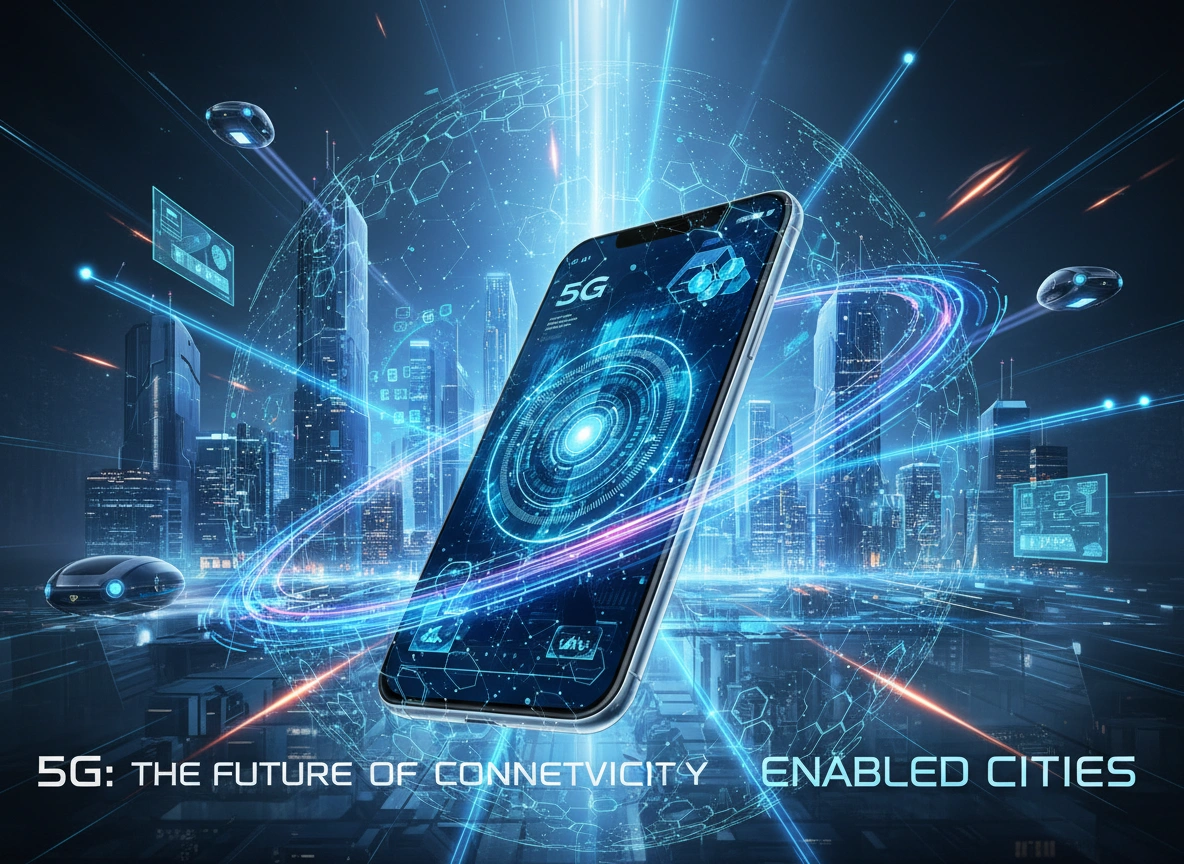
The concept of a “smart city” relies on a network of interconnected sensors and devices that collect and analyze data to improve urban life. 5G’s ability to connect millions of devices makes this vision achievable. Smart traffic lights can adjust to real-time traffic flow to reduce congestion, smart grids can manage energy consumption more efficiently, and public safety can be enhanced through a network of high-definition surveillance cameras and sensors. From waste management to public transportation, 5G provides the connectivity needed to build more efficient, sustainable, and livable cities.
Challenges and the Road Ahead
Despite its immense potential, the widespread rollout of 5G is not without its challenges. Building the necessary infrastructure is a massive and expensive undertaking. 5G, particularly its fastest millimeter-wave (mmWave) variant, operates on higher frequency bands that have a shorter range and are more easily blocked by obstacles like buildings and trees. This means a much denser network of small cell sites is required to ensure consistent coverage, especially in urban areas.
Security is another significant concern. With billions of new devices connecting to the network, the number of potential entry points for malicious attacks increases exponentially. Securing this vast and complex ecosystem, from IoT devices to critical infrastructure, is a paramount challenge that requires robust security protocols and constant vigilance. Finally, ensuring equitable access to 5G technology is crucial to avoid creating a new digital divide between those who have access to its benefits and those who do not.
Conclusion: A Connected Future Awaits
The impact of 5G on mobile technology is profound and far-reaching. It is more than just a faster network for our smartphones; it is a powerful platform that will ignite innovation across nearly every industry. By providing unprecedented speed, ultra-low latency, and massive connectivity, 5G is laying the groundwork for a future where remote surgery, autonomous vehicles, and truly smart cities are commonplace.
While the path to full 5G deployment is complex and filled with challenges, the momentum is undeniable. As the network continues to expand and mature, it will unlock capabilities that we are only just beginning to imagine. The transition to 5G is not simply an upgrade—it is the beginning of a new technological revolution that will redefine what it means to be connected.
Please visit website for more info