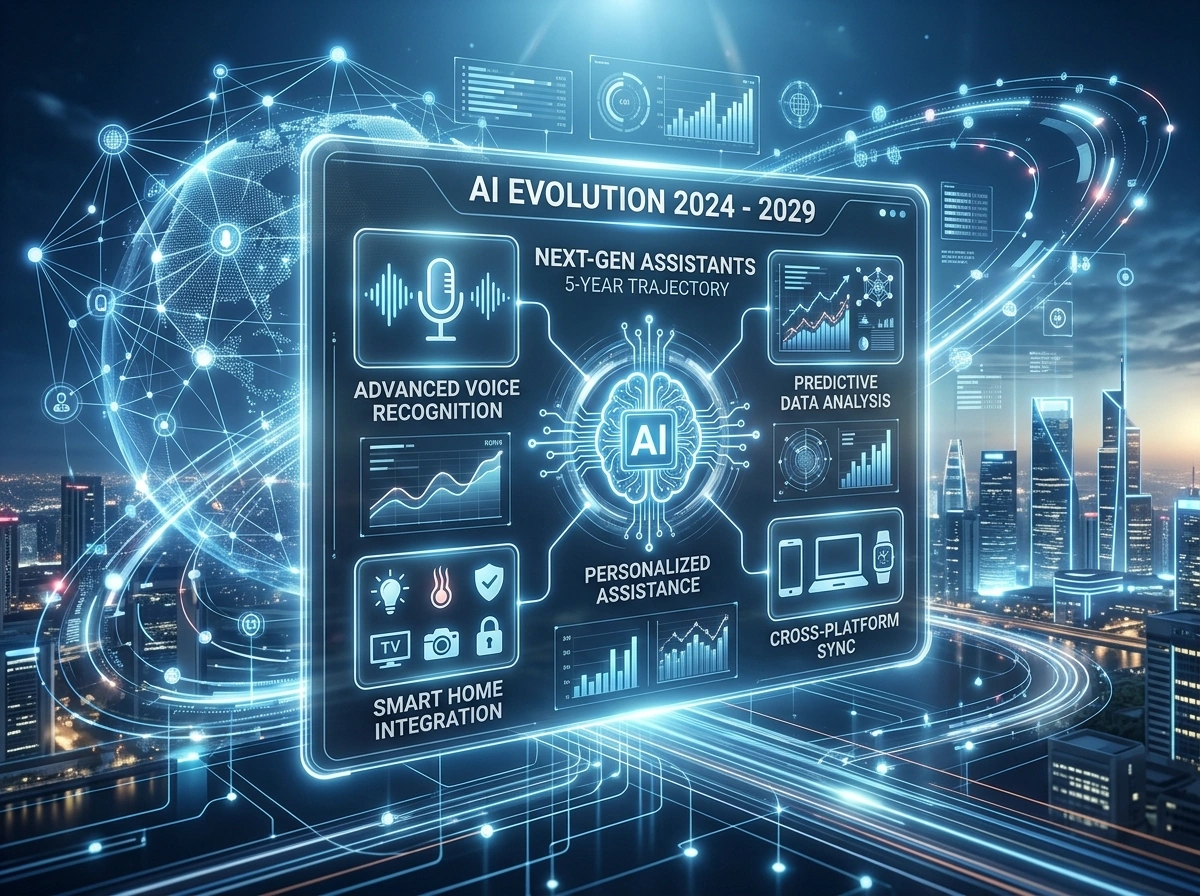
AI assistants have moved from novelty to necessity. They schedule our meetings, answer our questions, draft our emails, and even suggest what to cook for dinner. Yet what we use today is only the starting line. Over the next five years, these tools will evolve in ways that reshape how we work, communicate, and make decisions.
Drawing on insights from technology analysts at teck-jb.com, this article explores the key shifts ahead. From deeper personalization to stronger ethical guardrails, here is what the future of AI assistants may look like.
From Reactive Tools to Proactive Partners
Today’s assistants mostly wait for commands. You ask, they respond. That model is about to change. The next generation will anticipate your needs before you voice them.
Imagine an assistant that notices you have three back-to-back meetings and quietly blocks focus time afterward. Or one that spots a billing error in your inbox and flags it before you ever open the message. This shift from reactive to proactive behavior marks one of the biggest leaps coming our way.
Proactive support depends on context. Future assistants will weave together your calendar, location, habits, and communication patterns to act with genuine foresight. The goal is simple: less friction, more flow.
Hyper-Personalization at Scale
Personalization is nothing new, but the depth coming over the next five years will feel different. Tomorrow’s assistants will learn your unique voice, preferences, and routines, then adapt their responses accordingly.
Two people asking the same question may receive very different answers. A busy executive might get a one-line summary. A curious student might receive a detailed breakdown with examples. The assistant tailors not just the content but the tone, length, and timing of every reply.
This level of customization requires smarter memory. Instead of forgetting context between sessions, assistants will build lasting profiles that grow richer over time. The result is a tool that feels less like software and more like a colleague who truly knows you.
The Rise of Multimodal AI
Text-based chat has dominated the AI assistant landscape, but that is changing fast. Multimodal AI, which understands and creates across text, images, audio, and video, will become the standard.
Picture pointing your phone at a broken appliance and asking your assistant to diagnose the problem. It analyzes the image, listens to the strange noise, and walks you through a repair with annotated visuals. Or consider a designer describing an idea aloud while the assistant generates draft layouts in real time.
This blending of input types makes interactions far more natural. We rarely communicate with words alone, so neither should our tools. Multimodal capability closes that gap and unlocks use cases that were impossible just a few years ago.
Deeper Workplace Integration
The office is where AI assistants will prove much of their value. Over the coming years, expect them to become embedded in nearly every business workflow.
Instead of switching between a dozen apps, employees will rely on a single assistant that connects to their entire toolset. It can pull data from a spreadsheet, summarize a long report, draft a client proposal, and schedule the follow-up call, all from one conversation.
Several trends will drive this integration:
- Automated reporting that turns raw data into clear summaries on demand.
- Smart meeting support that captures notes, assigns action items, and tracks progress.
- Cross-platform connectivity that links email, chat, project tools, and databases.
- Role-aware assistance that adapts to whether you work in sales, finance, or engineering.
For small businesses especially, this could level the playing field. Tasks that once required entire teams may soon be handled by a capable AI partner working alongside a lean staff.
Emotional Intelligence and Human Connection
One of the most fascinating frontiers is emotional intelligence. Future assistants will read tone, sentiment, and context to respond with more empathy.
If you sound stressed during a request, the assistant might adjust its pace and offer to handle a few extra tasks. If you seem excited about a project, it could match your energy and suggest next steps. These subtle cues make technology feel more human and supportive.
Emotional awareness also has real-world benefits beyond convenience. In customer service, an assistant that detects frustration can escalate the issue faster. In healthcare and wellness apps, gentle, perceptive responses can make a meaningful difference for users who need support.
Of course, this raises important questions about authenticity and boundaries. The best implementations will use emotional intelligence to serve people, not manipulate them.
A Stronger Focus on AI Ethics and Trust
As assistants gain power, the conversation around ethics grows louder. The next five years will bring far greater attention to privacy, transparency, and fairness.
Users want to know how their data is used and stored. They want assurance that recommendations are not secretly biased or driven by hidden agendas. Companies that earn trust will lead the market, while those that ignore these concerns will struggle.
Expect to see clearer consent controls, explainable AI that shows its reasoning, and tighter rules around sensitive information. Regulation will likely tighten too, pushing developers to build responsible systems from the ground up rather than as an afterthought.
Trust is the foundation of adoption. People will only hand over more of their daily tasks to assistants they genuinely believe are working in their best interest.
Smarter, Faster, and More Accessible
Performance gains will continue at a rapid pace. Future assistants will respond faster, handle more complex requests, and run efficiently even on smaller devices.
This matters for accessibility. As these tools become lighter and more affordable, they will reach people who were previously left out. Voice-first assistants can support those with visual impairments. Real-time translation can break down language barriers. Simplified interfaces can welcome users who find traditional technology intimidating.
The democratization of AI means powerful help will not be limited to the tech-savvy or the wealthy. It will become a everyday resource available to nearly everyone.
Preparing for What Comes Next
So how should individuals and businesses get ready? The smartest move is to start experimenting now. Familiarity with current tools builds the confidence and skills needed to adopt more advanced versions later.
Businesses should think about which workflows could benefit most and begin small pilots. Individuals can explore how assistants fit into their daily routines, learning what works and what does not. Staying curious and adaptable will matter far more than chasing every new feature.
It also helps to follow trusted sources that track these developments closely. Resources like teck-jb.com offer ongoing analysis that can help you separate genuine progress from passing hype.
Conclusion
The next five years promise a remarkable transformation in how AI assistants serve us. They will grow more proactive, more personal, and more capable across text, voice, and visuals. They will weave themselves into our workplaces, respond with greater empathy, and operate under clearer ethical standards.
None of this will happen overnight, and challenges remain. Privacy, trust, and responsible design must keep pace with raw capability. But the direction is clear. AI assistants are evolving from simple tools into thoughtful partners that understand context, anticipate needs, and adapt to each of us.
Those who embrace this shift early, with both enthusiasm and care, will be best positioned to thrive. The future of AI assistants is not just about smarter machines. It is about building technology that genuinely makes our lives easier, richer, and more connected.