
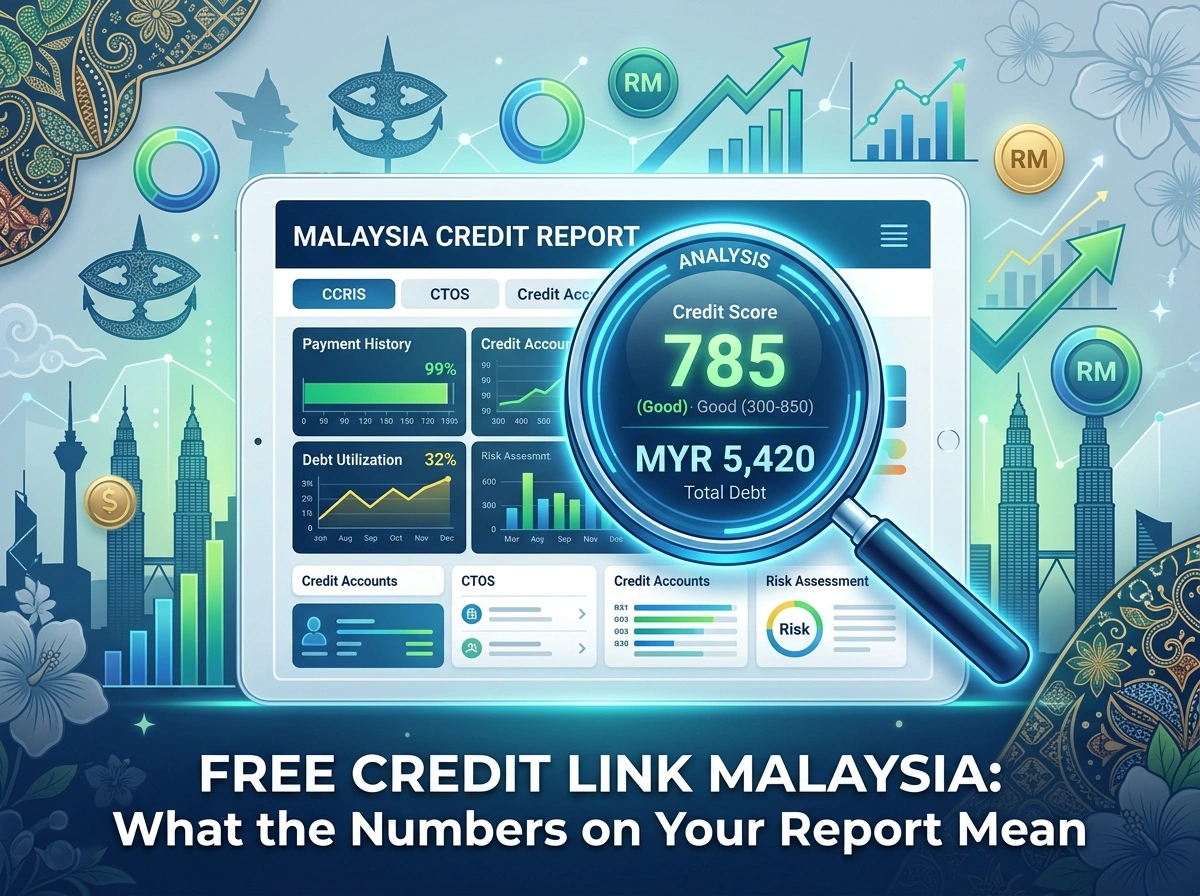
Your credit report can feel like a wall of codes, scores, and figures. Yet those numbers shape big moments in your life, from getting a home loan approved to landing a better interest rate on a car. If you have ever opened your report and felt lost, you are not alone. Many Malaysians never learn how to read these documents, even though the information directly affects their financial future.
The good news is that understanding your credit report is simpler than it looks. Once you know what each number signals, you can spot problems early, fix mistakes, and build a stronger financial profile. This guide breaks down the common figures you will find, explains what they generally mean, and shows you how to interpret them with confidence.
By the end, you will know how to read your report like a banker would, and what steps to take next.
Why Your Credit Report Matters
A credit report is a record of how you have managed borrowed money over time. Lenders use it to decide whether to approve your loan application and what terms to offer you. A clean, well-managed report can open doors. A report full of late payments or high balances can slow you down.
In Malaysia, credit information is typically gathered by reporting agencies and the central bank’s reporting system. These records pull together your loans, credit cards, and repayment behavior into one snapshot. Knowing what that snapshot says about you is the first step toward taking control.
If you want a simple starting point, you can review your details through a free credit link Malaysia resource to see where you stand before applying for new credit.
The Key Numbers on Your Credit Report
Let’s walk through the figures you are most likely to see, and what each one generally tells you and your lender.
1. Your Credit Score
The credit score is usually the headline number. It condenses your entire credit history into a single figure, often ranging from a few hundred points up to a higher ceiling depending on the scoring model used.
Here is the basic logic:
- Higher scores suggest you manage credit well and pose lower risk.
- Lower scores signal that lenders may see you as a higher risk.
A strong score generally means easier approvals and better rates. A weaker score does not mean you will be rejected, but it may lead to stricter terms. Think of the score as a summary, not the full story. Lenders still look at the details behind it.
2. Outstanding Balances
This figure shows how much you currently owe across your loans and credit cards. Lenders compare your balances to your income and your available credit limits.
Carrying high balances, especially on credit cards, can work against you. It suggests you may be stretched thin. Keeping balances low relative to your limits shows that you use credit responsibly and have room to breathe.
A quick tip: try to keep your credit card usage well below your total limit. This single habit can make a noticeable difference over time.
3. Credit Utilization
Closely tied to your balances, credit utilization measures how much of your available credit you are actually using. If you have a card with a RM10,000 limit and you owe RM5,000, your utilization on that card is 50%.
Lenders generally prefer to see lower utilization. High utilization can hint at financial pressure, even if you always pay on time. Spreading spending across cards or paying down balances before your statement date can help keep this number healthy.
4. Payment History and Conduct
Your payment history is one of the most important parts of the report. It records whether you pay on time, pay late, or miss payments altogether. You may see codes or status markers that show the condition of each account.
Common indicators include:
- On-time payments, which build trust.
- Late payments, which are noted by how many days overdue they are.
- Defaults or special attention accounts, which signal serious repayment trouble.
Even one or two late payments can appear on your report. The longer and more recent the delays, the more weight lenders give them. A consistent record of paying on time is the most reliable way to strengthen your profile.
5. Number of Credit Accounts
Your report lists how many active credit accounts you hold, including loans, credit cards, and financing arrangements. This number tells lenders how much credit you currently manage.
Having several accounts is not automatically bad. What matters is how well you handle them. A mix of well-managed accounts can show experience. Too many new accounts opened in a short window, however, may raise questions.
6. Credit Inquiries
Every time you apply for credit, a record of that application may appear on your report. These are often called inquiries.
A few inquiries are normal. But many inquiries in a short period can look like you are desperate for credit, which may concern lenders. If you are shopping for the best loan, try to keep your applications focused and within a reasonable timeframe.
7. Length of Credit History
This indicator reflects how long you have been using credit. A longer track record gives lenders more data to assess your reliability.
If you are new to credit, do not worry. Your history grows naturally over time as you manage accounts responsibly. Avoid closing your oldest accounts without good reason, since they help establish your track record.
How to Interpret These Numbers Responsibly
Reading the numbers is only half the job. Interpreting them wisely is what truly helps. Keep these principles in mind.
Look at the full picture, not one figure. A single low number does not define you. Lenders weigh many factors together, so focus on overall patterns.
Check for errors. Mistakes happen. An account you closed might still show as active, or a payment you made might be recorded as late. Review your report carefully and report any errors to the relevant agency.
Track changes over time. Pull your report regularly to see whether your habits are improving your standing. Progress is often gradual, so patience matters.
Avoid panic decisions. A weaker report is not permanent. Steady, consistent behavior can rebuild your profile month after month.
Simple Steps to Improve Your Credit Standing
If your numbers are not where you want them, these practical actions can help:
- Pay every bill on time. Set reminders or automatic payments to never miss a due date.
- Lower your balances. Pay down high-interest debt first to ease your utilization.
- Limit new applications. Apply for credit only when you genuinely need it.
- Keep older accounts open. A longer history works in your favor.
- Review your report often. Catch errors and track your progress.
These habits are not complicated, but they require consistency. Small, steady actions add up to a stronger profile.
Common Mistakes to Avoid
Even careful people slip up. Watch out for these pitfalls:
- Ignoring small debts. A forgotten balance can grow and damage your record.
- Maxing out credit cards. High utilization hurts even when you pay on time.
- Applying for too much at once. Multiple applications can signal risk.
- Never checking your report. What you do not see can still affect you.
Avoiding these traps keeps your report cleaner and your options open.
Conclusion
Your credit report is more than a list of numbers. It is a story about how you handle money, and lenders read that story every time you apply for financing. Once you understand your score, balances, utilization, payment history, and inquiries, you can take charge of your financial reputation with confidence.
The path to a healthier report is straightforward: pay on time, keep balances low, apply for credit thoughtfully, and review your records regularly. These habits build trust over time and put better loan terms within reach.
Your next step is simple. Pull a copy of your credit report, read through each number using this guide, and start improving the areas that need attention. The sooner you understand your standing, the sooner you can shape a stronger financial future.