
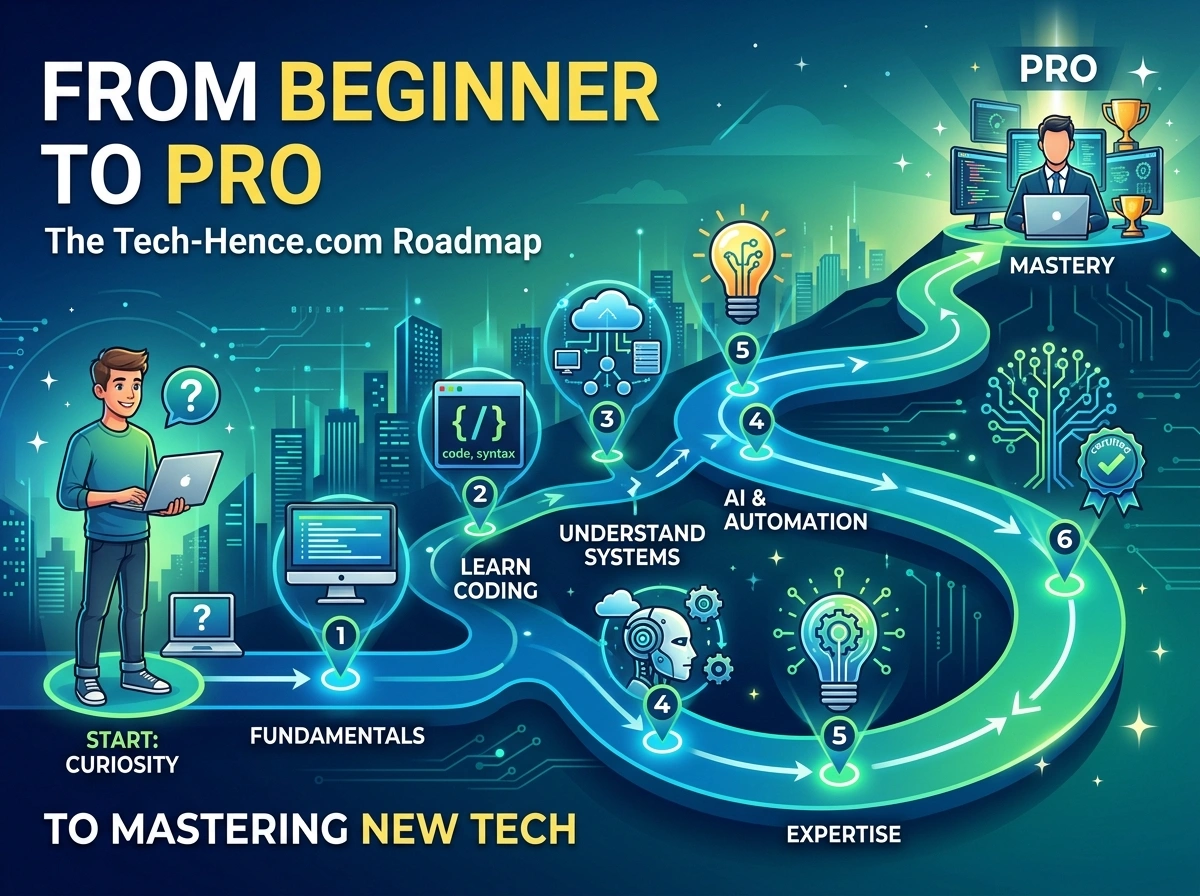
Learning a new technology can feel like standing at the base of a mountain with no trail in sight. You know the summit exists, but every path looks steep and confusing. The good news? Mastery isn’t about talent or a computer science degree. It’s about following a proven sequence of steps that turn confusion into confidence.
This roadmap breaks that journey into clear stages. You’ll learn how to build a solid foundation, sharpen practical skills, stay current with fast-moving trends, and finally reach the professional level where you solve real problems with ease. Whether you’re picking up a programming language, a design tool, or an entirely new field, the path is surprisingly similar. Let’s walk through it together.
Why Most Beginners Get Stuck
Before we map the route, it helps to understand where people trip up. Many learners jump straight into advanced tutorials, skipping the basics. Others collect courses like trophies but never build anything real. And some burn out chasing every shiny new trend instead of focusing.
The fix is structure. When you know which stage you’re in and what comes next, learning stops feeling random. You gain momentum because each step builds on the last. That’s exactly what this roadmap gives you.
Stage 1: Build a Strong Foundation
Every expert started as a beginner who understood the fundamentals. This stage is about knowing the “why” behind the “how.”
Start With Core Concepts, Not Shortcuts
It’s tempting to memorize commands or copy code without understanding it. Resist that urge. Spend your first weeks learning the underlying principles. If you’re learning web development, grasp how the internet actually works before diving into frameworks. If you’re learning data analysis, understand what data types are and why they matter.
A helpful rule: for every tutorial you follow, pause and ask, “Why does this step exist?” That single habit separates people who truly learn from those who just imitate.
Choose the Right Learning Resources
Quality beats quantity here. Pick one or two trusted sources rather than juggling ten. Look for beginner-friendly guides that explain things plainly. Curated tech blogs and learning hubs like tech-hence.com can help you find structured explanations and practical starting points without the overwhelm.
Set a Realistic Learning Schedule
Consistency wins over intensity. Studying 45 minutes a day beats a single exhausting weekend cram session. Block out regular time, keep notes, and track small wins. Momentum comes from showing up, not from occasional bursts.
Stage 2: Develop Practical Skills
Knowledge without practice fades fast. This stage turns what you know into what you can do.
Learn by Building Real Projects
The moment you understand the basics, start building. Nothing teaches faster than a project you actually care about. Want to learn coding? Build a simple to-do app. Learning graphic design? Recreate a poster you admire. These small projects force you to apply concepts and expose the gaps in your knowledge.
Consider this example: two learners study the same JavaScript course. One only watches the videos. The other builds a small weather app alongside each lesson. Three weeks later, the builder can create features from scratch, while the watcher still feels lost. The difference is doing.
Embrace Mistakes as Feedback
Errors aren’t failures—they’re the fastest teachers you’ll ever have. When something breaks, resist the urge to give up or copy a fix blindly. Read the error message. Search for it. Understand what went wrong. Every bug you solve deepens your skill and builds problem-solving muscles you’ll use for years.
Practice Deliberately
Random practice creates slow progress. Deliberate practice targets your weak spots. If you struggle with a specific concept, spend extra time on it instead of repeating what you already know. Push slightly beyond your comfort zone each session, and your skills will climb steadily.
Stage 3: Stay Current With Trends
Technology never sits still. What’s cutting-edge today may be outdated in two years. Staying relevant is part of the journey.
Follow the Right Sources
You don’t need to read everything. Instead, choose a few reliable outlets and communities that filter the noise for you. Follow industry newsletters, respected creators, and active forums. Set aside a short weekly window to scan for updates so you stay informed without getting overwhelmed.
Filter Hype From Genuine Value
Not every trend deserves your attention. Some technologies fade quickly, while others reshape entire industries. Ask two questions before diving in: Does this solve a real problem? Is adoption growing steadily? If the answer is yes to both, it may be worth learning. If it’s mostly buzz, wait and watch.
Join a Community
Learning alone is slower and lonelier than it needs to be. Communities keep you accountable and expose you to real-world insights. Join Discord servers, subreddits, or local meetups tied to your field. Ask questions, share your projects, and help others. Teaching what you know is one of the best ways to cement your own understanding.
Stage 4: Reach Professional-Level Expertise
This final stage is where skill becomes mastery. You stop asking “How do I do this?” and start asking “What’s the best way to solve this?”
Solve Complex, Real-World Problems
Professionals don’t just complete exercises—they tackle messy, open-ended challenges. Take on freelance work, contribute to open-source projects, or volunteer to solve problems for a local business. These situations rarely have neat answers, which is exactly why they build expertise.
Build a Portfolio That Proves Your Skills
Talk is cheap; proof is powerful. Document your best projects in a portfolio that shows what you can do. Include the problem you solved, your approach, and the result. A strong portfolio opens doors that certificates alone rarely can.
Never Stop Refining
Even experts keep learning. The difference is that they refine rather than restart. They deepen their craft, mentor others, and explore adjacent skills. Mastery isn’t a finish line—it’s a mindset of continuous improvement.
Common Mistakes to Avoid Along the Way
- Tutorial hopping: Finishing courses without building anything real.
- Skipping fundamentals: Rushing to advanced topics too early.
- Chasing every trend: Losing focus by learning everything at once.
- Learning in isolation: Missing the feedback and support of a community.
- Fearing mistakes: Avoiding challenges instead of learning from them.
Steer clear of these traps and your progress will feel far smoother.
Conclusion: Your Path Forward
Mastering new technology isn’t magic—it’s a repeatable process. Start by building a strong foundation, then turn knowledge into skill through real projects. Stay current by following trusted sources and joining communities, and finally reach expertise by solving complex problems and proving your work.
The most important step is the first one. Pick your technology, choose one solid resource, and commit to consistent practice. Progress compounds faster than you’d expect. Six months from now, the skill that feels intimidating today could be the one you teach others. Take that first step, and let the roadmap guide the rest of your journey.