A well-made replica bracelet can look stunning straight out of the box. But shine fades, links loosen, and clasps wear down faster than most owners expect. The difference between a piece that lasts and one that dulls within months often comes down to care habits.
In this guide, you’ll learn exactly how to keep your bracelet looking its best. We’ll cover cleaning, storage, daily wear, moisture, polishing, clasp maintenance, and when it’s time to swap out worn parts. Along the way, you’ll see the simple “do this, not that” choices that protect your investment. Let’s get into it.
Why Bracelet Care Matters More Than You Think
The bracelet takes more abuse than any other part of a watch. It rubs against desks, soaks up sweat, and flexes thousands of times a day. On a replica, the plating and metal quality may differ from a genuine piece, which means dirt, moisture, and friction can show their effects sooner.
Good care isn’t complicated. It just requires consistency and a few smart habits. Whether you bought your piece for style or as a placeholder before a luxury purchase, treating it well keeps it comfortable and presentable far longer.
Cleaning: Do Gentle, Not Harsh
Dirt and oils build up in the gaps between links. Left alone, this grime dulls the finish and can irritate your skin.
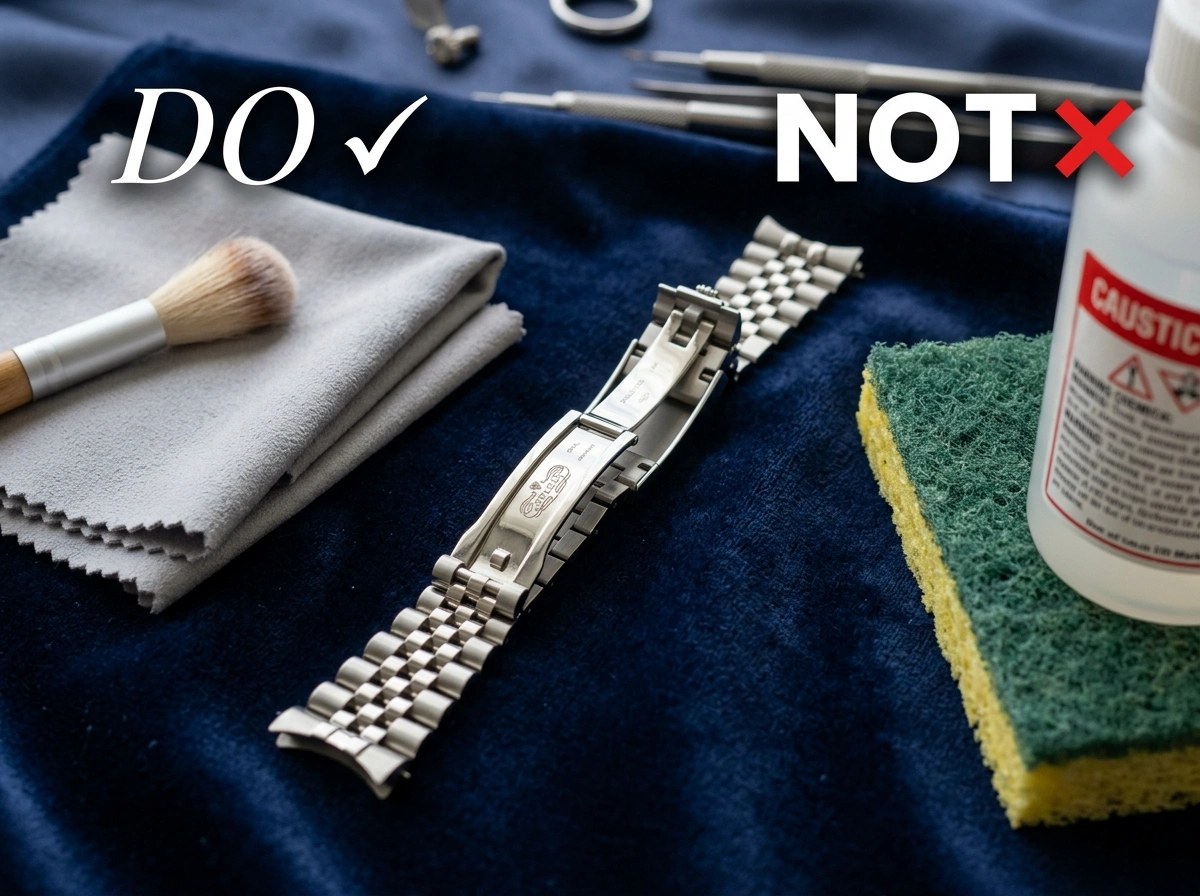
Do this: Mix warm water with a drop of mild dish soap. Use a soft toothbrush to gently scrub between the links and around the clasp. Rinse with a damp cloth, then dry thoroughly with a lint-free microfiber towel.
Not that: Don’t reach for harsh chemicals, bleach, or abrasive cleaners. These strip plating and leave scratches. Avoid scrubbing with stiff brushes or paper towels, which can scuff the surface.
Aim to clean your bracelet every two to four weeks if you wear it daily. A quick wipe each evening removes sweat before it sits overnight.
Storage: Do Dry and Padded, Not Cramped
How you store your watch when it’s off your wrist matters as much as how you wear it.
Do this: Keep your watch in a soft-lined box or pouch, away from direct sunlight and humidity. A simple cushion holds the bracelet in a relaxed shape and prevents links from kinking. A small silica gel packet nearby helps control moisture.
Not that: Don’t toss your watch loose in a drawer with keys, coins, or other metal items. Those hard contacts cause dings and deep scratches. Avoid bathrooms or windowsills where heat and humidity fluctuate.
Daily Wear Habits: Do Mindful, Not Careless
Small adjustments to how you wear your watch add up over time.
Do this: Fit the bracelet so it sits snug but not tight. A proper fit reduces sliding, which limits friction against your skin and clothing. Take the watch off before lifting weights, gardening, or doing heavy manual work.
Not that: Don’t wear it during activities that bang the bracelet against hard surfaces. Repeated impacts loosen pins and stretch links. And don’t sleep in it—nighttime tossing grinds the clasp against bedding and surfaces.
If you’re shopping for quality and want to compare construction details before buying, browsing trusted sellers of a fake rolex can help you understand what materials and finishes hold up best.
Moisture Exposure: Do Caution, Not Confidence
Water is one of the biggest threats to a replica bracelet, especially if the piece isn’t truly water-resistant.
Do this: Remove your watch before showering, swimming, or washing dishes. If it does get wet, dry it immediately, paying attention to the clasp and link gaps where water hides.
Not that: Don’t assume your watch can handle submersion just because it looks like a dive model. Many replicas have limited or no real water resistance. Don’t expose the bracelet to saltwater or chlorine, both of which accelerate corrosion and plating loss.
Sweat counts as moisture too. After a hot day or a workout, give the bracelet a quick wipe to prevent salt buildup.
Polishing: Do Light, Not Aggressive
A gentle polish brings back shine, but overdoing it causes real damage.
Do this: Use a microfiber cloth or a polishing cloth made for jewelry to buff out light surface marks. Light, even strokes restore luster without removing material.
Not that: Don’t use metal polish compounds or rotary tools on plated bracelets. These strip the thin coating and expose the base metal underneath, which can’t be reversed. On replicas with PVD or gold-tone finishes, aggressive polishing ruins the look permanently.
When in doubt, polish less. A subtle, even finish always beats a worn, patchy one.
Clasp Care: Do Inspect, Not Ignore
The clasp endures the most stress of any component. It opens and closes constantly, and a failing clasp can send your watch crashing to the floor.
Do this: Inspect the clasp weekly. Check that it snaps shut firmly and the spring mechanism holds. Clean inside the folding sections, where grime collects fastest. Apply a tiny drop of light machine oil to stiff hinges if needed.
Not that: Don’t force a sticky clasp or keep wearing one that pops open on its own. A loose clasp is a warning sign, not a quirk to tolerate. Ignoring it risks losing the entire watch.
When to Replace Worn Parts
Even with great care, parts wear out. Knowing when to replace them saves you bigger headaches.
Signs It’s Time
- Stretched links: If the bracelet sags or rattles loosely, the link pins have worn.
- Faded plating: Patchy or brassy areas mean the finish has thinned beyond repair.
- A failing clasp: Repeated accidental openings signal a worn mechanism.
- Sharp edges: Worn links can develop rough spots that snag clothing or scratch skin.
What to Do
Replacement links, pins, and clasps are widely available and affordable. A local watch repair shop can swap parts in minutes. Replacing a single worn component often costs far less than living with a piece that looks and feels tired.
Common Mistakes to Avoid
Even careful owners slip up. Here are the errors that cause the most damage:
- Skipping regular cleaning until grime is visible and stuck.
- Using household chemicals that strip plating fast.
- Wearing the watch in water without checking real resistance.
- Over-polishing and rubbing through the finish.
- Storing it loose alongside hard metal objects.
- Ignoring clasp problems until the watch falls.
Avoid these six, and you’ll already be ahead of most owners.
Key Takeaways
- Clean gently with mild soap and a soft brush every few weeks.
- Store your watch dry, padded, and away from heat and humidity.
- Wear it mindfully and remove it for heavy or wet activities.
- Polish lightly, and never with abrasive compounds on plated metal.
- Inspect the clasp weekly and act on early warning signs.
- Replace worn links and clasps before they cause damage or loss.
Final Thoughts
Caring for a replica bracelet comes down to a handful of simple, consistent habits. Clean it gently, store it smartly, and keep an eye on the clasp. Skip the harsh chemicals and aggressive polishing that ruin finishes for good.
The payoff is real: a bracelet that stays comfortable, looks sharp, and serves you well for years. Start with one habit this week—a quick evening wipe-down—and build from there. Your watch will thank you every time you put it on.